Toe shape and heel style are function decisions long before they are style decisions. The two features that most people choose by looks are the same two that decide whether a boot slides into a stirrup, carries you across a concrete floor all day, or simply looks sharp under a pair of jeans. Leather grade and fit get most of the attention, but a beautifully made boot in the wrong toe and heel for the task will still fight you. This guide walks through what each toe shape and heel type actually does, then pairs them to the way the boots will be worn.
Toe shapes and the trade between room and the stirrup
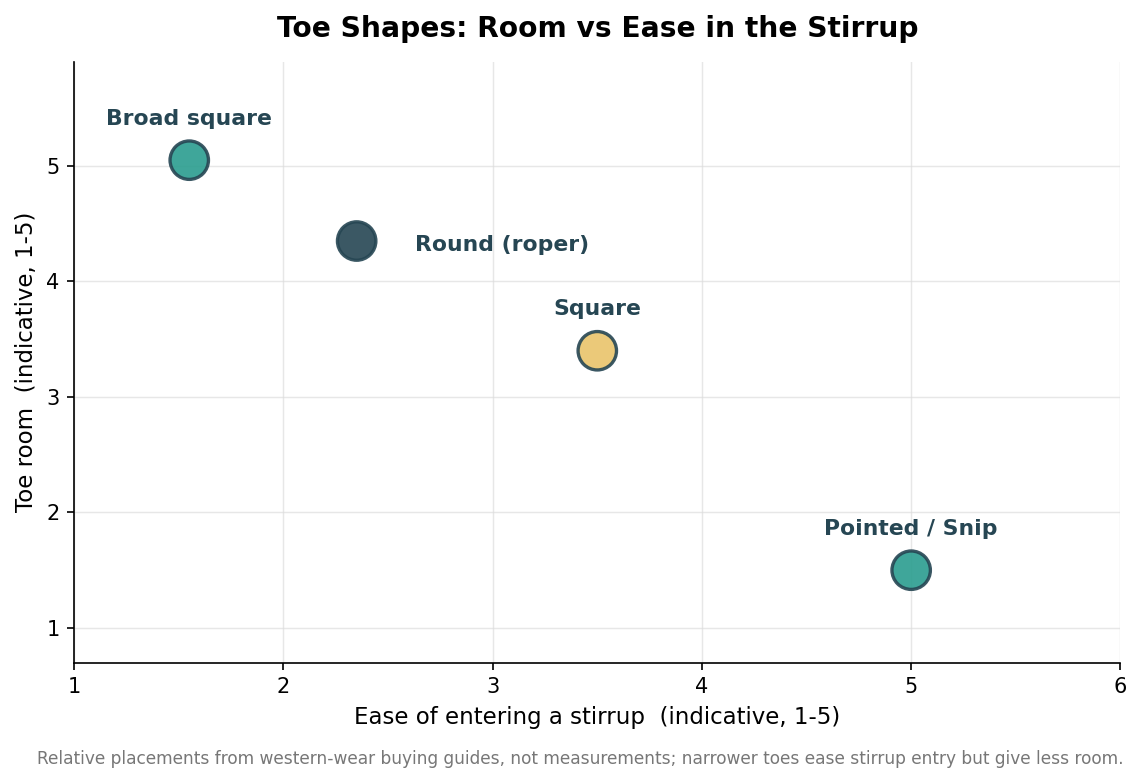
Toe shape controls two things that pull against each other: how much room your foot has, and how easily the boot finds a stirrup. Pointed and snip toes sit at the narrow end. A snip toe is a pointed toe with the very tip flattened, and both taper the front of the boot to a small point. That shape slides into a stirrup with the least fuss and reads as the most formal, but it gives the least toe room and is not the choice for hours on your feet. Round toes, often called roper toes, sit at the opposite end with the most generous room, which makes them the comfortable pick for ranch work, walking, and wider feet, though the fuller front is less graceful entering a stirrup on a long ride. Square toes split the difference and have become the versatile everyday shape, comfortable enough for walking while still workable in the saddle. Broad or wide square toes push room to the maximum and reward anyone standing on hard ground all day. The scatter below places the shapes on those two axes; the ratings are indicative rather than measured, but the diagonal is real, because more stirrup ease almost always means less room.
Heel types and matching height to the ground you cover
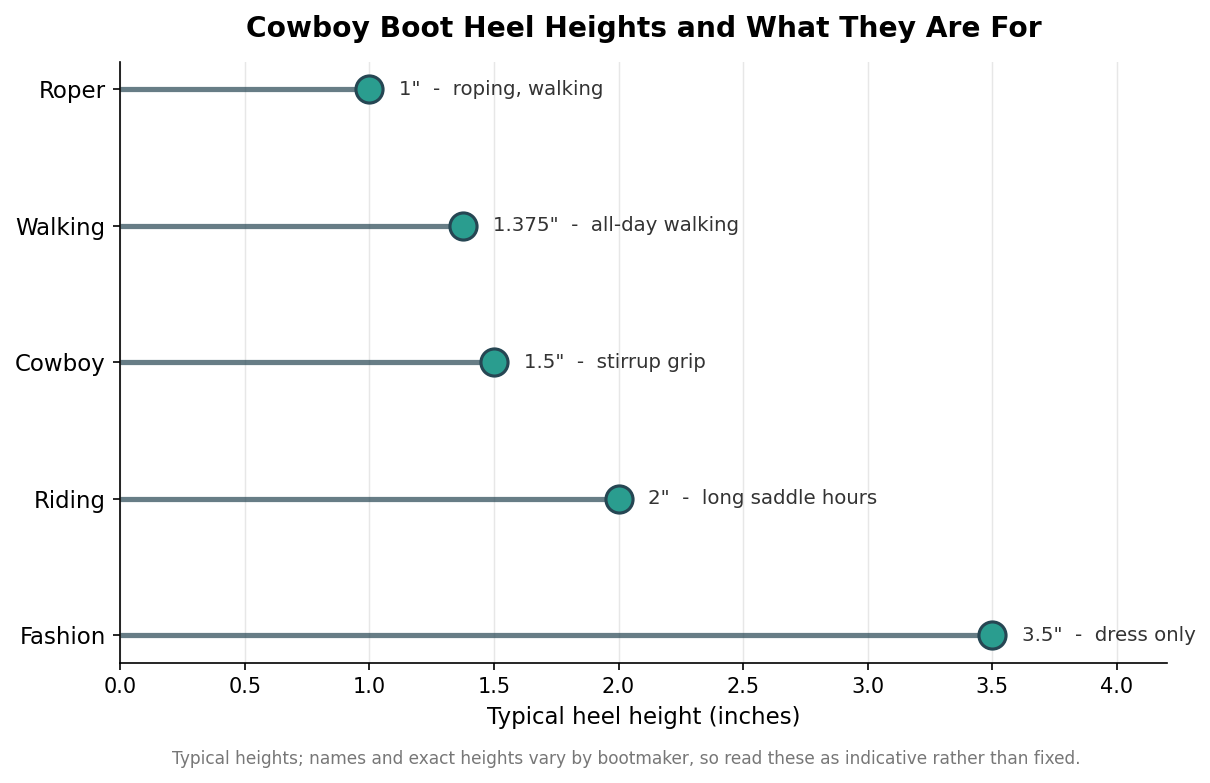
Heels sort out along height and shape, and the difference is not cosmetic. A low, wide, flat heel keeps you stable on the ground; a taller, angled heel is built to lock into a stirrup and stop your foot sliding through. The roper heel, around one inch and flat, is made for getting off the horse and moving, which is why ropers wear well for walking. The walking heel, close to one and three-eighths of an inch, is wider and flat for continuous wear. The cowboy heel, roughly one and a half inches with an underslung angle, trades walking comfort for a firm grip in the stirrup, and the riding heel takes that idea to about two inches for long saddle hours, at the cost of being genuinely uncomfortable to walk in. At the far end, a fashion heel of three inches or more is a dress statement and little else. Those numbers, drawn from western-wear guides, are typical rather than fixed, because bootmakers name and cut heels differently, so treat the figures below as a map of the range instead of exact specifications.
Pairing the two to the job
The choice gets simple once you decide what the boots will do most. For riding, pair a narrower toe with a taller, angled heel: a snip or pointed toe eases the stirrup, and a cowboy or riding heel near one and a half to two inches keeps the foot from sliding through and holds position through long hours in the saddle. For ranch work and all-day walking, do the opposite: a round or broad square toe for room, over a roper or walking heel around one to one and three-eighths inches, so the boot stays stable and comfortable on hard ground where you are on your feet more than in the stirrup. For dress, a pointed or snip toe with a higher, cleanly underslung heel gives the elongated line that looks right with slacks or a suit, accepting that comfort is not the priority. For an everyday, do-a-bit-of-everything boot, a square toe over a walking heel is the safest single pick, comfortable to walk in and still usable if you climb onto a horse now and then. When the primary use is genuinely mixed, lean toward the walking-friendly end, because most owners spend far more time on the ground than in a stirrup.
Locking the spec for a custom or bulk order
On a made-to-order boot, toe and heel are choices you make on purpose rather than accept off a shelf, so it is worth being deliberate. Name the dominant use first and let it set the pairing, then treat looks as the tiebreaker among options that already suit the task. If you are ordering a run of matched boots for a crew, a wedding party, a team, or a store program, resist the temptation to spec a dramatic riding heel across the board when most wearers will only ever walk in them; a square toe over a walking heel keeps the widest range of people comfortable and still photographs as a proper western boot. Remember that toe and heel also interact with the rest of the build, since a taller angled heel changes your posture and stride and a roomier toe can affect how the whole boot is sized, so confirm these before the last is cut. Lead times on custom western boots commonly run several weeks and stretch further for exotic leathers or large matched sets, which is another reason to settle the toe and heel early. Get those two decisions right for the job at hand, and the boots will feel correct the first time they go on, not after a season of wishing you had chosen differently.