To care for custom cowboy boots, brush them after every wear, clean before you condition, dry wet pairs slowly away from heat, and store them upright with the shaft supported. Customized Cowboy Boots makes pairs with stitched shafts, inlays and monograms, and this routine keeps that leather and decoration looking the way it did on the approved mockup.
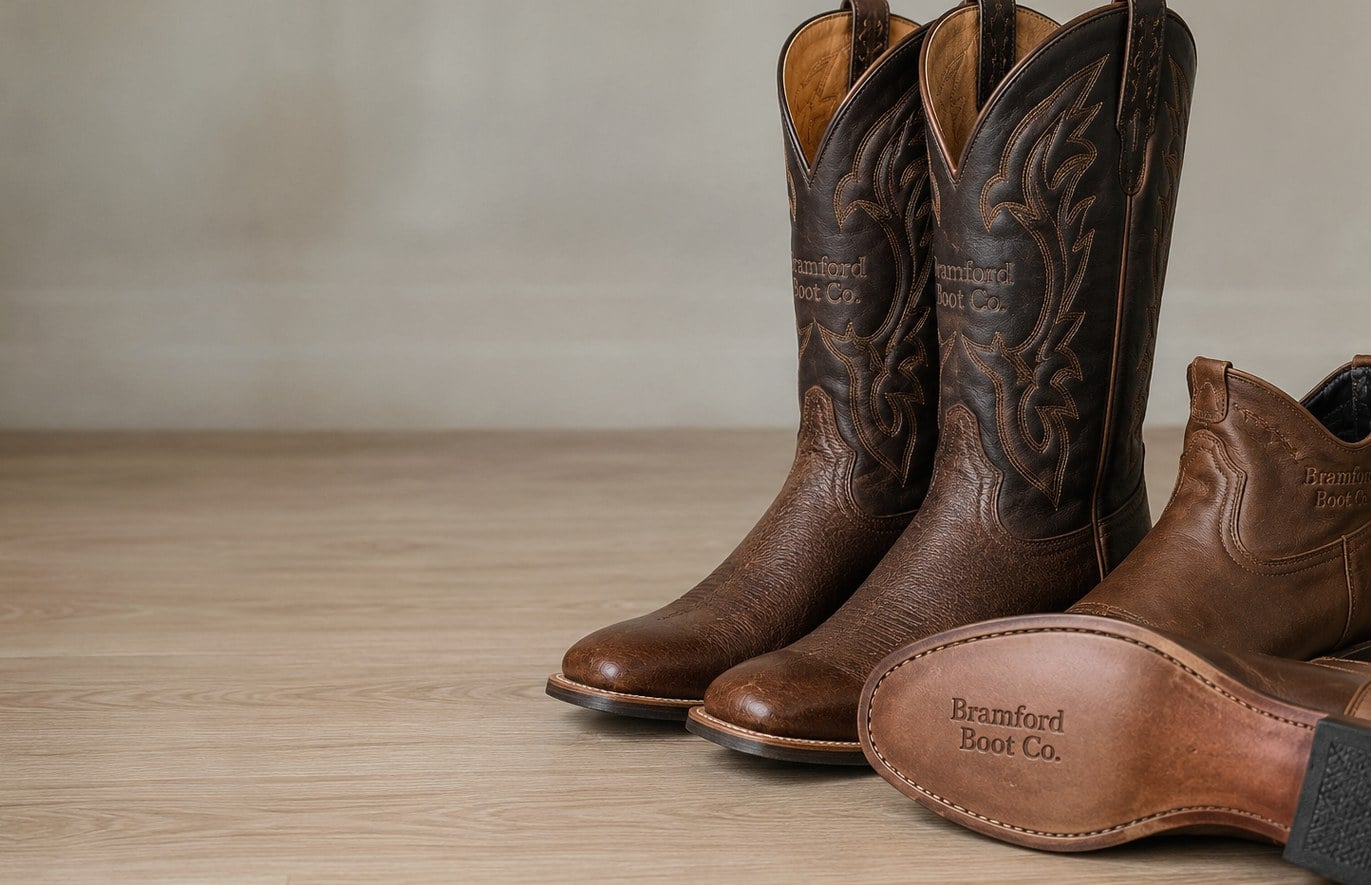
- Brush off dirt after every wear and clean before conditioning.
- Condition when leather looks dull or dry, in thin coats, testing on a hidden spot first.
- Dry soaked boots slowly at room temperature, never beside a heater or in direct sun.
- Store boots upright with a boot tree or shaper so decorated shafts do not crease.
- Customized Cowboy Boots offers resoling and recrafting, and can match new pairs to your approved design.
How do you care for custom cowboy boots so they last?
Caring for custom cowboy boots comes down to four habits: brush off dirt after every wear, wipe and condition the leather when it starts to look dry, let wet boots dry slowly at room temperature, and store each pair upright with something inside the shaft. Those habits protect the leather, the stitching on the shaft and the welt that holds the sole on.
Custom cowboy boots carry more than a stock pair. A ranch brand inlay, a stitched monogram or a team color on the shaft is the reason the boots were ordered, and that decoration only looks right while the leather around it stays supple and clean. Cracked leather pulls stitch rows apart, and a dried-out vamp creases deeply across the toe.
The good news is that boot care takes minutes, not hours. The routine below works for cowhide, goat and most smooth leathers that Customized Cowboy Boots offers, with notes for roughout and exotic finishes further down.
- After every wear: brush or wipe off dust and mud.
- When the leather looks dull or feels dry: clean, then condition.
- When the boots get wet: dry slowly, away from heat.
- Between wears: store upright, shaft supported, out of direct sun.
How should you clean cowboy boots after a day on the ranch or at an event?
Clean cowboy boots by knocking off loose dirt, brushing the whole boot with a soft horsehair brush, and wiping stubborn spots with a damp cloth. Use plain water first and a leather cleaner or saddle soap only when water does not lift the mark. Never soak the boot or put it in a washing machine.
Work from the top down. Brush the shaft first so dust does not settle into freshly cleaned areas, then the vamp, the toe and finally the welt, where mud and manure collect in the seam between upper and sole. An old toothbrush reaches into the welt and into the channels of decorative stitching without scuffing the thread.
Cleaning around stitching and inlays
Decorated shafts need a lighter touch. Wipe along the direction of the stitch rows rather than across them, and keep cleaner off colored thread where you can. Inlays and overlays have edges where two pieces of leather meet; dab those edges rather than scrubbing so you do not lift them. If your boots carry a monogram or a logo, clean that panel last with a barely damp cloth.
Cleaning the soles
Rubber soles can be scrubbed with water and a stiff brush. Leather soles should be wiped, not soaked, and allowed to dry fully before the next wear.
How often should custom cowboy boots be conditioned?
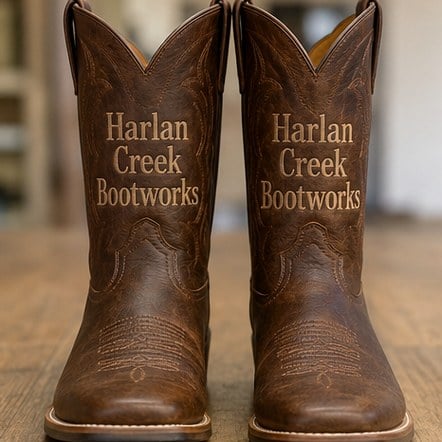
Condition custom cowboy boots whenever the leather looks dull, feels stiff or shows fine dry lines, and always after the boots have been soaked and dried. Boots worn daily in dust, sun or arena dirt need conditioning far more often than dress boots saved for weddings and events. Let the leather tell you, rather than following a fixed calendar.
Always clean before you condition. Conditioner rubbed over dirt grinds grit into the grain and seals it in. Apply a thin layer with a soft cloth or your fingers, work it into the creases across the vamp where the boot flexes, let it soak in, then buff off the excess. A heavy coat does not help; it leaves the surface tacky and attracts more dust.
Test any new conditioner on a hidden spot, such as the inside of the pull strap, first. Some oils darken lighter leathers, which matters on a custom pair where the leather color was chosen to match a brand or a team. Conditioning the whole pair evenly keeps both boots the same shade.
- Clean first, condition second, buff third.
- Use thin coats and repeat rather than one heavy coat.
- Pay extra attention to flex creases and the welt seam.
- Keep heavy oils away from roughout and suede.
What is the right way to dry cowboy boots that got soaked?
Dry soaked cowboy boots slowly at room temperature. Wipe off surface water, stuff the shaft and foot loosely with plain paper or a cedar boot tree, and stand the boots upright somewhere with air movement. Replace damp paper as it soaks through. Never put leather boots next to a heater, fire, vent or in direct sun to speed things up.
Fast heat is the most common way good boots are ruined. Leather shrinks and stiffens as it dries quickly, the grain cracks, and a leather sole can curl or split. Glue in a cemented boot can also soften with heat, and even a welted boot can lose its shape across the toe.
Once the boots are dry to the touch inside and out, give the uppers a light conditioning. Water pulls natural oils out of leather, so a pair that has been through a rainstorm, a wash rack or a muddy pen needs that oil put back before the next wear. Leather soles benefit from a little conditioner too.
- Wipe off mud and standing water.
- Stuff with paper or insert a boot tree.
- Stand upright at room temperature; swap paper as needed.
- Condition once fully dry.
How should cowboy boots be stored between wears and off season?
Store cowboy boots clean, dry and upright, with a boot tree or shaft support inside so the shaft does not fold over and crease. Keep them in a cool, dry closet out of direct sunlight, and give each pair room to breathe. A cloth bag is better than plastic, which traps moisture and encourages mold.
Shaft support matters more on custom cowboy boots than on most footwear. A tall decorated shaft that slumps for weeks develops a permanent fold, often right through the stitch pattern or the inlay. Boot shapers, rolled magazines or a cedar tree all keep the shaft standing.
For seasonal storage, such as wedding boots or rodeo team boots put away until next year, clean and condition the pair before it goes in the closet. Check stored boots occasionally for dust, dryness or any sign of mildew, especially in humid climates.
| Storage choice | Good for boots? | Why |
|---|---|---|
| Cedar boot tree | Yes | Holds shape and absorbs moisture |
| Cloth boot bag | Yes | Keeps dust off and lets leather breathe |
| Sealed plastic bin | Avoid | Traps moisture and can cause mildew |
| Hot garage or attic | Avoid | Heat dries and cracks leather |
| Lying flat in a pile | Avoid | Shafts fold and decorated panels crease |
Does care differ for roughout, exotic or decorated cowboy boots?
Yes. Smooth cowhide and goat follow the clean, condition and buff routine, but roughout and suede-finish cowboy boots need a dry brush or suede eraser instead of oils, and exotic leathers need cleaners and conditioners made for that specific skin. Heavily stitched or inlaid shafts need gentle cleaning along the edges of each panel.
Roughout: popular on ranch and roper boots because it hides scuffs. Brush with a stiff dry brush to lift dirt and restore the nap. Oils and creams flatten and darken roughout, so keep them away unless you want a darker, slicker finish.
Exotics: scaled leathers can lift or dry at the scale edges. Clean with the grain, condition sparingly with a product sold for that leather, and keep exotic boots out of the sun.
Decorated shafts: colored thread and inlays are the reason for a custom pair. Keep cleaner and dark conditioner off light thread, and condition the leather around an inlay with a fingertip rather than a rag. For more on decoration choices, see stitched shaft and inlay designs and monogrammed custom cowboy boots.
When do cowboy boots need professional repair instead of home care?
Cowboy boots need a professional when the sole is worn through or separating, the heel is worn down unevenly, the welt stitching is broken, or the leather has cracked rather than just creased. Home care keeps boots in good shape; it cannot replace a sole or restitch a welt.
Catching wear early saves the upper. Resole while there is still sole left between you and the ground, before wear reaches the welt. A Goodyear welted boot can usually be resoled more than once, which is one reason construction matters on boots meant to last; see Goodyear welt vs. cemented cowboy boots.
Customized Cowboy Boots offers resoling and recrafting for worn pairs, and can match replacement pairs to an approved design kept on file, so a ranch crew or team does not end up with mismatched boots when one pair is finally retired.
How can a group keep a whole boot order looking consistent?
A group keeps its custom cowboy boots consistent by giving every wearer the same short care card, using one conditioner across the whole order, and replacing worn-out pairs from the same approved design. Matching boots drift apart fast when one person oils theirs weekly and another never touches them.
For ranch crews, rodeo teams, dance clubs and corporate programs, a simple card in each box works well: brush after wear, dry slowly, condition when dry, store upright. A booster club or office manager can keep a shared brush and tin of conditioner for the group.
When new people join or a pair wears out, Customized Cowboy Boots can make additional pairs from the same approved design. Orders start at 12 pairs, a free mockup comes back within 24 hours, and standard turnaround is about 2 weeks after approval. To start an order or add pairs, request a custom quote, or see how it works.
Frequently asked questions
Can custom cowboy boots be cleaned with household soap and water?
Custom cowboy boots can be wiped with plain water, but household dish soap and detergents strip oils from leather and can leave it dry and stiff. Use a soft brush and a damp cloth first, then a leather cleaner or saddle soap for stubborn marks. Follow with a light coat of conditioner once the boots are dry.
Is mink oil good for custom cowboy boots?
Mink oil softens and water-resists smooth cowboy boot leather, but it noticeably darkens many colors and can soften the leather more than some wearers like. On custom cowboy boots chosen to match a brand or team color, test it inside the pull strap first. A lighter cream conditioner suits most smooth leathers on boots ordered from Customized Cowboy Boots.
Should you waterproof custom cowboy boots before the first wear?
Custom cowboy boots worn in mud, rain or wash racks benefit from a leather water protector applied before the first wear. Choose a product made for the specific leather, test it on a hidden spot, and keep it off roughout unless you accept a darker finish. Reapply after deep cleaning, since cleaners remove protective coatings.
How do you get salt or winter stains off cowboy boots?
Salt stains on cowboy boots come off best when treated quickly. Wipe the white marks with a cloth dampened in a mild mix of water and a little white vinegar, then wipe again with plain water. Let the boots dry slowly at room temperature, and condition the leather afterward because salt pulls moisture out of the grain.
How do you clean manure and arena dirt out of cowboy boot stitching?
Manure and arena dirt in cowboy boot stitching lifts out with a dry soft brush once the mud has dried, followed by an old toothbrush along each stitch row. Use a barely damp cloth for what remains, wiping with the stitching rather than across it. Avoid soaking decorated shafts, since water can carry dye from colored thread.
Can scuffs be removed from custom cowboy boots?
Light scuffs on smooth custom cowboy boots usually disappear with cleaning, conditioning and a buff with a soft cloth. Deeper scuffs can be filled with a matching colored cream polish. On roughout boots, scuffs are brushed out with a stiff brush instead. Gouges that cut through the leather need a repair shop or a resole and recraft service.
Should cowboy boots be rotated instead of worn every day?
Cowboy boots last longer when rotated, because leather and linings need time to dry out from sweat between wears. Wearers who rely on one pair daily, such as ranch crews, often order a second pair in the same design. Customized Cowboy Boots can add pairs to an approved design, counted toward the minimum order of 12.
How do you keep the decorated shaft of cowboy boots from creasing?
The decorated shaft of cowboy boots stays crease-free when it is supported whenever the boots are off your feet. Use boot shapers, a cedar boot tree or rolled paper, and store pairs standing upright rather than lying in a pile. Avoid tucking tall shafts under a bench or folding them into a bag, where stitched panels can crease permanently.
What should you do if cowboy boots get moldy in storage?
Moldy cowboy boots should be taken outside, brushed off with a soft brush, and wiped with a cloth dampened in a mild water and white vinegar mix. Let them dry slowly in fresh air away from direct heat, then condition. Store them afterward in a drier spot, in a cloth bag rather than sealed plastic.
How can a coordinator teach a whole group to care for their custom cowboy boots?
Custom cowboy boots ordered for a ranch, team or company stay alike when the coordinator hands every wearer the same short care card: brush after wear, dry slowly, condition when dry, and store upright. Agreeing on one conditioner for the whole group keeps leather shades matching. Customized Cowboy Boots can then match any replacement pairs to the approved design.
Can conditioner change the color of custom cowboy boot stitching?
Conditioner can darken light colored stitching on cowboy boots if it is rubbed directly into the thread. On custom cowboy boots with white, cream or pastel stitch patterns, apply conditioner to the leather between the stitch rows with a fingertip, and wipe any excess off the thread right away. Test first on a hidden spot.
Get a free mockup for your cowboy boots
Send your logo or idea and the quantity you have in mind. Customized Cowboy Boots returns a free mockup within 24 hours, you approve the design before anything is produced, and standard turnaround is about two weeks with faster options available. Get a custom quote.