Leather Sole vs Rubber Sole Cowboy Boots: Which to Order
the right sole for every job.
Order leather-soled cowboy boots for riders, dancers and dress wear, and rubber-soled cowboy boots for crews who walk wet, rocky or slick ground all day. Customized Cowboy Boots builds both soles on the same custom design, so one order of 12 or more pairs can mix them, with a free mockup within 24 hours.
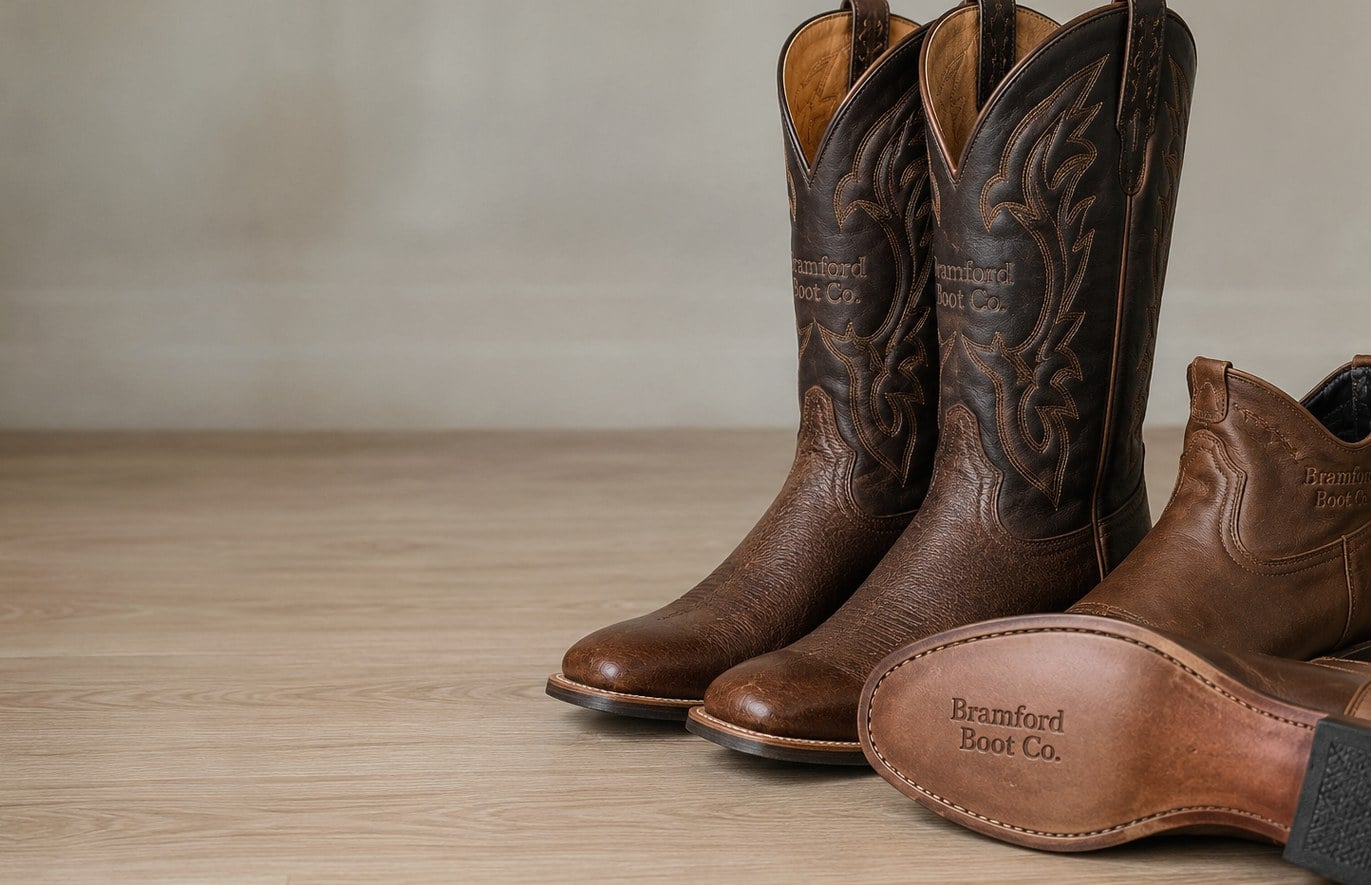
Which sole each wearer in your order needs.
Horseback riders
Leather soles slip in and out of the stirrup without catching, the traditional choice for riders who spend the day in the saddle.
Feedlot and barn crews
Rubber soles hold on wet concrete, wash bays and muddy alleys, where a smooth leather sole can slide out from under a worker.
Dance halls and line dance teams
Leather soles pivot and slide on a wooden floor, so turns and spins feel smooth instead of grabbing at every step.
Office and dress wear
Leather soles keep a slim, clean profile under dress jeans, the look most people expect from a formal western boot.
Equipment yards and shops
Rubber soles cushion long days on hard floors and give footing on steel steps, trailer decks and oily shop surfaces.
Event and arena staff
Rubber soles handle gravel lots, wet grass and grandstand ramps for crews who stay on their feet from setup to teardown.
Custom cowboy boots styles you can order.
 Custom Cowboy Boots | Custom Printed in Bulk
 Roper & Ranch Work Boots | Custom Printed in Bulk
 Stitched Shaft & Inlay Designs | Custom Printed in Bulk
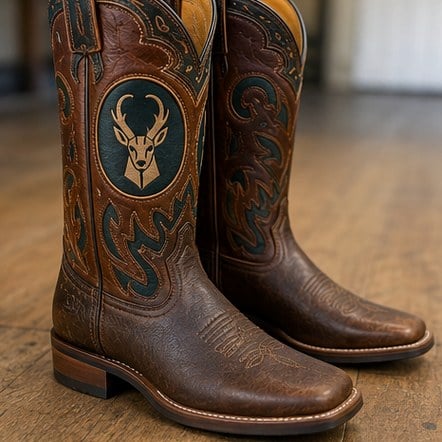 Wedding & Occasion Boots | Custom Printed in Bulk
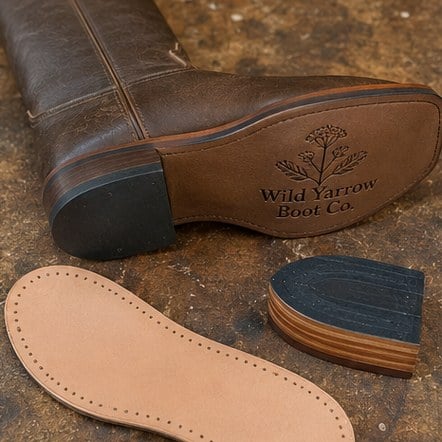 Resoling & Recrafting | Custom Printed in Bulk
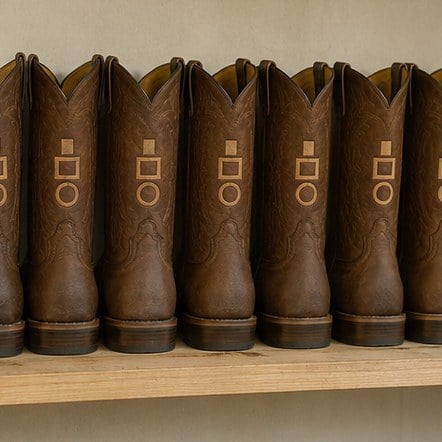 Ranch & Corporate Boot Programmes | Custom Printed in Bulk
One boot design, the right sole under every wearer.
Customized Cowboy Boots treats the sole as a per-pair choice, not a whole-order compromise. Riders get leather, wash-bay crews get rubber, and the brand on the shaft stays identical, so the group still looks like one outfit.
- Leather or rubber chosen pair by pair
- Same shaft design and brand across both soles
- Sole choice confirmed on the roster before production
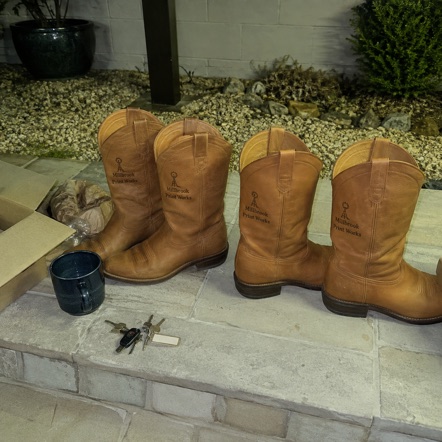
Custom cowboy boots with the sole your crew needs.
Sole options
Smooth leather soles for riding, dancing and dress, or rubber lug and rubber walking soles for grip and cushioning on hard or wet ground.
Mixing soles
Leather and rubber soles can be assigned wearer by wearer, and every pair still carries the same shaft design and brand.
Quantities
Orders start at 12 pairs per design, and pairs on either sole count together toward that minimum.
Timing
A free mockup arrives within 24 hours of your artwork, and boots ship in about 2 weeks, faster with express shipping.
What is the difference between leather sole and rubber sole cowboy boots?
Leather sole cowboy boots use layers of stiff, smooth leather on the bottom, while rubber sole cowboy boots use a molded rubber outsole for grip and cushioning. The upper, the shaft and the custom design stay the same; only what touches the ground changes. That single choice decides how the boot behaves in a stirrup, on a dance floor, in a wash bay and on a slick office lobby.
A leather sole is the traditional cowboy boot bottom. It slides smoothly, looks slim from the side and molds slightly to the wearer’s foot over time. A rubber sole trades some of that slim profile for traction, shock absorption and better resistance to standing water.
Customized Cowboy Boots builds both on the same custom boots, so the question is never which sole the whole order gets. The real question is which sole each wearer needs for the ground they cover every day.
Leather vs rubber soles side by side
Leather and rubber soles on cowboy boots each win in different conditions. Use this comparison to match the sole to the wearer before you fill in the order roster.
| Factor | Leather sole | Rubber sole |
|---|---|---|
| Stirrups | Slides in and out cleanly | Can grab the stirrup tread |
| Wet concrete and mud | Slick, absorbs water | Strong grip, sheds water |
| Dance floors | Smooth pivots and turns | Grabs the floor on spins |
| Cushioning on hard floors | Firm underfoot | Softer, absorbs shock |
| Dress appearance | Slim, traditional edge | Thicker, more casual look |
| Break-in | Stiff at first, flexes with wear | Comfortable sooner |
| Resoling | Classic resole on welted boots | Rubber outsoles can be replaced on welted boots |
No single sole wins every row. The verdict depends entirely on where the boots will be worn.
Which sole is best for riding horses in cowboy boots?
A leather sole is best for riding horses in cowboy boots because the smooth bottom slides into the stirrup and, just as important, slides back out if a rider has to get clear in a hurry. Aggressive rubber lugs can catch on the stirrup tread, which is why most ranch riders and rodeo competitors stay with leather.
Riders who also do a lot of ground work sometimes choose a low-profile rubber walking sole as a middle path. It grips better than leather on a wet barn aisle but lacks the deep lugs that hang up in a stirrup. Pair either sole with a riding heel, which holds the foot in position in the stirrup.
If your order covers a ranch crew that splits time between the saddle and the pens, ask each person how many hours they ride versus walk. Customized Cowboy Boots records the answer as a sole choice on the roster, so the riders and the yard hands each get the bottom that fits their day.
Which sole works better for ranch work, shops and wet ground?
Rubber soles work better for ranch work on foot, equipment shops and anywhere the ground is wet, because rubber keeps its grip on concrete, mud and steel where smooth leather slides. Rubber also stops water from wicking up into the sole, so feet stay drier through a day of hosing pens or working in the rain.
Feedlots, sale barns, dairies, equipment dealers and event crews usually standardize on rubber. Wash bays, loading chutes and trailer ramps are where a leather sole is most likely to slip, and those are the places crews spend much of their day.
- Lug rubber soles: deeper tread for mud, gravel and uneven pasture.
- Rubber walking soles: flatter tread for shop floors and pavement, with better cushioning.
- Leather soles: best kept for riding days and dry ground.
The roper and ranch work boots page covers boot styles built for this kind of daily work.
Should dance teams and dress wear choose leather soles?
Dance teams and dress wear should usually choose leather soles, because leather pivots smoothly on wooden floors and keeps the slim, traditional profile people expect at a wedding, banquet or office. Rubber soles grab the floor during spins and add visual bulk at the edge of the boot.
For dance halls with polished floors, a leather sole lets dancers turn without twisting a knee. For weddings and formal events, the clean leather edge looks right with dress jeans or a suit. The wedding and occasion boots page shows the dress styles that most often go out on leather.
The exception is the outdoor event. A wedding on wet grass or a dance on a concrete pad is where a thin rubber walking sole can save the night. Customized Cowboy Boots can put both on one order if part of the group is dancing indoors and part is working the event outside.
Can one custom cowboy boot order mix leather and rubber soles?
One custom cowboy boot order can mix leather and rubber soles freely. The sole is set pair by pair on the roster, alongside size, width and name, while the shaft design, leather colors and brand stay identical across the order. Pairs on both soles count together toward the minimum of 12.
This matters for groups that are not uniform in what they do. A ranch might put riders on leather and the feedyard crew on rubber. A rodeo association might want leather for competitors and rubber for arena staff. A western business might choose leather for sales staff and rubber for the warehouse team.
- List every wearer with size, width and role.
- Mark leather or rubber next to each name based on where they work.
- Send the roster with your artwork to request a quote.
- Approve the mockup, returned free within 24 hours, before anything is built.
The how it works page walks through each step from roster to delivery.
How do soles affect resoling and the life of custom cowboy boots?
Soles affect the life of custom cowboy boots mainly through construction: a welted boot can be resoled with either leather or rubber, while a cemented boot is much harder to rebuild. The sole material wears out first on almost any boot, so a resolable build is what lets a good pair last many seasons.
Leather soles wear faster on pavement and gravel but wear evenly and can be replaced cleanly by a boot repair shop. Rubber soles last longer on hard surfaces and can also be swapped on a welted boot. Some wearers start on leather and switch to rubber at their first resole once they know how they actually use the boots.
Read more on Goodyear welt vs. cemented cowboy boots and on resoling and recrafting before you decide which construction to order.
Verdict: which sole should you order?
Order leather soles for riders, dancers and dress wear, and rubber soles for anyone working on foot on wet, hard or uneven ground. When a group includes both, mix them on one order rather than forcing a compromise on everyone.
If you are unsure, start from the ground, not the boot. Ask each wearer where they will spend most of their hours in these boots and choose the sole that handles that surface. Customized Cowboy Boots can flag a sole that does not match the role you list, before the mockup is approved and before you pay anything.
Ready to start? Request a custom quote with your roster and logo, and Customized Cowboy Boots will return a free mockup within 24 hours, with finished boots in about 2 weeks.
From your logo to delivered cowboy boots in four steps.
Send your artwork
Upload your logo or describe the idea and tell us the quantity you have in mind.
Get a free mockup
A designer returns a mockup of your cowboy boots with the artwork in place. Unlimited free revisions.
Approve the design
Nothing is produced until you approve the mockup, and you pay nothing before that.
Receive your order
Standard production is about two weeks after approval; faster turnaround is available with express shipping.
Custom cowboy boots for sole choices, answered.
Do leather sole cowboy boots get slippery on wet concrete?
Leather sole cowboy boots do lose much of their grip on wet concrete, tile and steel, because smooth leather has no tread and softens slightly when it soaks up water. Wearers who cross wash bays, rainy parking lots or hosed-down pens every day are safer in rubber soles. Customized Cowboy Boots can assign rubber soles to those wearers on the same custom order.
Can rubber sole cowboy boots be used for horseback riding?
Rubber sole cowboy boots can be used for riding, but deep lug rubber can catch on the stirrup tread and make it harder to free a foot quickly. Riders who want some grip on the ground usually choose a flatter rubber walking sole instead of a heavy lug. For daily saddle work, a smooth leather sole with a riding heel remains the safer standard.
Are rubber soles more comfortable than leather soles on cowboy boots?
Cowboy boots with rubber soles usually feel more comfortable on concrete and pavement because rubber absorbs shock that a firm leather sole passes straight to the foot. Leather soles feel stiff at first and become more flexible as they wear in. Shop staff, event crews and anyone standing on hard floors all day tend to prefer the cushioning of rubber.
Do leather soles on cowboy boots wear out faster than rubber?
Leather soles on cowboy boots generally wear faster than rubber when the wearer walks a lot on pavement, gravel or concrete, since those surfaces grind leather down. On grass, dirt and in the saddle, leather wears slowly. Customized Cowboy Boots recommends welted construction for wearers on leather soles so a worn sole can be replaced instead of retiring the boot.
Can I switch from leather to rubber soles when my cowboy boots are resoled?
Welted cowboy boots can usually be switched from leather to rubber soles, or back again, at the first resole, because the outsole is stitched to the welt rather than glued to the upper. Many wearers make the change once they learn how they really use their boots. Cemented boots are far harder to resole, so this flexibility depends on construction.
Which sole is better for line dancing on a wooden floor?
Cowboy boots with leather soles are better for dancing on a wooden floor because smooth leather lets the foot pivot through turns and spins without grabbing. Rubber soles stick to polished wood and can twist a knee during fast turns. Some dancers order leather soles for performances and a separate rubber-soled pair for outdoor events on concrete or grass.
Do rubber soles make custom cowboy boots look less dressy?
Custom cowboy boots with rubber soles do look slightly more casual because the outsole is thicker and the edge sits wider than a trimmed leather sole. From standing height, most people notice the shaft design long before the sole. For weddings, banquets and front-office staff, Customized Cowboy Boots usually suggests leather soles to keep the slim traditional profile.
Can different wearers in one custom cowboy boot order get different soles?
Different wearers in one custom cowboy boot order can each get a different sole, because Customized Cowboy Boots sets the sole pair by pair on the roster. The shaft design, colors and brand stay identical, so the group still looks matched. Leather and rubber pairs count together toward the minimum order of 12 pairs per design.
Which sole should ranch crews who both ride and do ground work choose?
Ranch crews splitting time between the saddle and the pens often do best with cowboy boots on leather soles for heavy riders and a flat rubber walking sole for those mostly on foot. A low-profile rubber sole grips a wet barn aisle without the deep lugs that hang up in a stirrup. Customized Cowboy Boots can note each crew member's choice on the order roster.
Do rubber sole cowboy boots keep feet drier than leather soles?
Rubber sole cowboy boots keep feet drier in wet conditions because rubber does not absorb water, while a leather sole slowly soaks up moisture from puddles, dew and wash water. Wet leather also loses grip and can stiffen as it dries. Dairy, feedlot and event crews working early mornings or wet seasons usually choose rubber soles for that reason.
How do I tell Customized Cowboy Boots which sole each person wants?
Custom cowboy boot orders at Customized Cowboy Boots use a roster that lists each wearer's size, width, name and sole choice in one place. Add a leather or rubber column next to every name and send it with your artwork through the quote form. The sole choices are confirmed with the mockup, so nothing is built until you approve them.
Is a leather sole safer than rubber in a stirrup if a rider falls?
Cowboy boots with smooth leather soles are widely preferred in the saddle because leather slides out of the stirrup more easily than a lugged rubber sole that can catch on the tread. Combined with a proper riding heel, leather helps keep the foot from pushing through the stirrup. Riders should still use stirrups sized correctly for their boots.
Do leather sole cowboy boots need a break-in period?
Leather sole cowboy boots feel stiff for the first several wears because the layered sole leather has to flex and shape to the foot. Wearing them for short stretches on dry ground speeds the process. Rubber-soled boots usually feel flexible sooner. Customized Cowboy Boots suggests leather-soled wearers start breaking in their boots before any big event or long workday.
Can rubber soles be added to custom cowboy boots with an inlay shaft?
Custom cowboy boots with inlay, overlay or stitched shaft designs can take rubber soles just as easily as leather, because the decoration sits on the shaft and the sole is chosen separately. The finished pair keeps the full shaft artwork with a more practical bottom. Customized Cowboy Boots shows the chosen sole on the mockup so you can see the complete boot.
Does the sole choice change the turnaround time for custom cowboy boots?
Custom cowboy boots from Customized Cowboy Boots follow the same schedule whether pairs use leather or rubber soles, or a mix of both. The free mockup arrives within 24 hours of your artwork, and standard turnaround is about 2 weeks after approval, with faster turnaround available through express shipping when an event date is close.
What sole should arena and event staff wear in custom cowboy boots?
Arena and event staff are usually best served by custom cowboy boots with rubber soles, because their day covers gravel lots, wet grass, concrete concourses and steel ramps. Rubber grips each surface and cushions long hours standing. Staff who also ride in the arena can be switched to leather soles on the same roster while keeping the shared event design.
Ready to see your cowboy boots with your logo?
Free mockup within 24 hours. Minimum order 12. Standard turnaround about 2 weeks, faster available. You pay nothing until you approve the design.
Related pages
- Get a custom cowboy boot quote
- Roper and ranch work boots
- Goodyear welt vs. cemented cowboy boots
- Wedding and occasion boots
- How it works
- How many custom cowboy boots to order
- Monogrammed Custom Cowboy Boots: Initials, Names and Titles
- How to Care for Custom Cowboy Boots: Cleaning, Conditioning, and Storage
- Bulk Custom Cowboy Boots with Logo: How to Order for a Large Crew
Win Free Stuff
Enter below for a chance to win plus receive 10% off your first order.
🎉 You are in!
We will text you your 10% off code. Good luck!