Custom cowboy boots for winter need a grippier sole, a fit measured with heavy socks, a forgiving leather and an order placed before the holiday rush. Customized Cowboy Boots returns a free mockup within 24 hours and makes pairs in about 2 weeks after approval, so the sole, leather and shaft can all be set for cold weather in time.
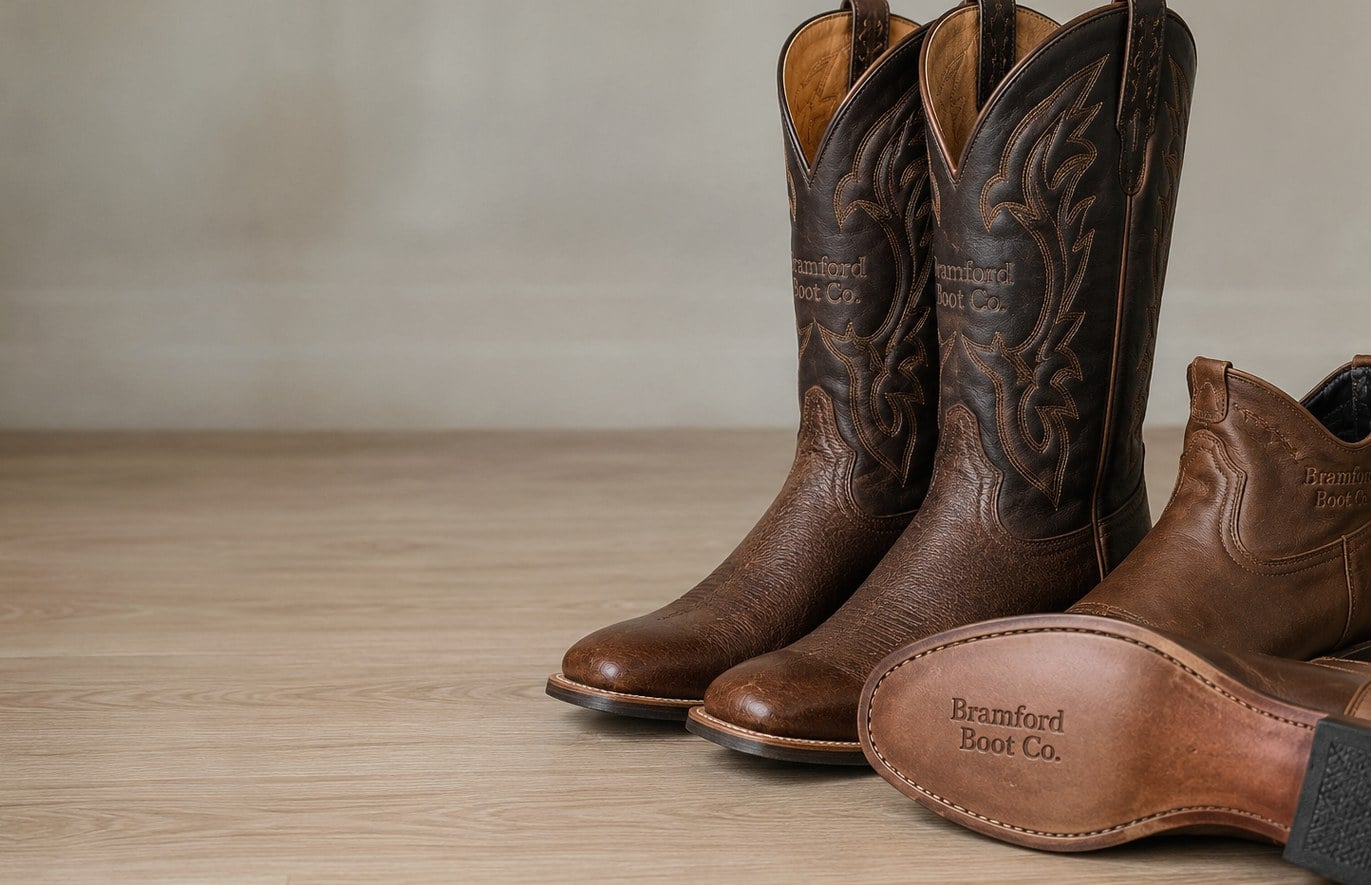
- Rubber, treaded soles and roper heels grip best on ice, snow and mud.
- Measure feet and calves while wearing the winter socks the boots will be worn with.
- Dark cowhide and roughout hide slush and grime better than light leathers.
- Free mockup within 24 hours; about 2 weeks of production after approval.
- Approve designs and collect sizes before the holiday break.
What should you change on custom cowboy boots ordered for winter wear?
Custom cowboy boots ordered for winter should get four changes: a rubber or lug-style sole for grip on ice and mud, a fit that leaves room for heavier socks, a darker or roughout leather that hides slush and grime, and a shaft height that keeps snow out. Customized Cowboy Boots can set every one of those on the mockup before anything is made.
A boot specified for a dry summer arena behaves differently in a January feedlot. Smooth leather soles that feel great on a dance floor lose grip on frozen ground, light tan leather shows every road-salt line, and a snug summer fit turns tight once wool socks go on. None of this means winter boots have to look plain. The ranch brand inlay, the stitched shaft and the monogram on the pull straps all carry over; only the working parts change.
- Sole: rubber or lug for traction.
- Fit: measured with the socks you will actually wear.
- Leather: darker colors or roughout for wet, dirty months.
- Shaft: tall enough to keep snow and slush out.
When should you order custom cowboy boots to have them for winter and the new year?
Order custom cowboy boots for winter as early in November as you can. Customized Cowboy Boots returns a free mockup within 24 hours, and standard turnaround is about 2 weeks after you approve the design, with faster turnaround available through express shipping. The calendar risk is not production; it is how long your group takes to approve the design and collect sizes.
Late in the year, every step that depends on people slows down. Decision makers travel, crews scatter for the holidays and carriers run heavy volume. A boot order that would take a few weeks in October can drift into January if the roster sits unanswered over Thanksgiving. Work backward from the date the boots must be on feet, then build in a buffer for approvals and delivery.
- Pick the date the boots must be worn, such as a winter kickoff or the first cold-weather shift.
- Send the logo, brand or monogram and request the mockup.
- Collect sizes while revisions are underway; revisions are unlimited and free.
- Approve the design; you pay nothing until you do.
- Allow about 2 weeks of production plus shipping, or choose express shipping.
Which sole and heel hold up best on ice, snow and mud?
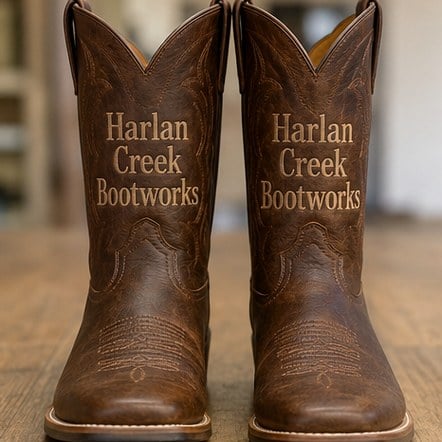
For winter, a rubber sole with a defined tread and a lower roper-style heel grips best on ice, snow and mud. A smooth leather sole looks classic and slides into a stirrup easily, but it offers little traction on frozen concrete or packed snow. Many crews order rubber for ground work and keep leather for riding and dress pairs.
The heel matters as much as the sole. A tall, underslung riding heel is built to hold a stirrup, and it can catch or roll on uneven frozen ground. A lower, wider roper heel puts more of the boot on the surface, which helps when someone spends the day walking between pens, trucks and shop floors. The full trade-off is laid out on the leather sole vs rubber sole page.
| Winter task | Sole | Heel |
|---|---|---|
| Feeding, chores, shop and yard work | Rubber, treaded | Roper |
| Riding in cold weather | Leather or thin rubber | Riding heel |
| Office, events and holiday parties | Leather | Either |
| Mixed riding and ground work | Rubber | Roper or walking heel |
Should winter cowboy boots be sized differently for thick socks?
Winter cowboy boots should be measured while wearing the socks that will go with them. A boot that fits perfectly over a thin dress sock can pinch across the instep once a heavy wool sock goes on, and a tight boot is a cold boot because it squeezes circulation in the foot. Customized Cowboy Boots works from the measurements you send, so send winter measurements for winter boots.
Measure at the end of the day, standing, with the winter socks on. Note the instep and calf as well as length, because thicker socks and tucked-in thermal layers add bulk at the calf where a shaft closes around the leg. If one person wants a single pair for every season, measure with a medium-weight sock as a compromise rather than the thinnest or thickest pair they own.
For a group, add a sock note to the sizing form so nobody guesses. The same habit prevents most returns: one line that says what socks to wear when measuring saves an exchange later. The how it works page explains how sizes move from your roster into production.
Which leathers and colors suit custom cowboy boots in winter?
Darker smooth cowhide and roughout are the most forgiving leathers for custom cowboy boots worn through winter. Dark brown, black and deep oxblood hide slush lines and grime, while roughout, with the flesh side out, scuffs without showing it and sheds dirt with a brush. Light tans and bright exotics look striking but demand more cleaning in wet months.
Color also affects how the decoration reads. A cream or turquoise stitch pattern stands out sharply on a black shaft, and a ranch brand inlay in a contrasting leather stays visible even when the vamp is muddy. If the boots double as event wear, choose a shaft design that looks good clean and still reads when the foot is dirty.
| Leather | Winter strength | Watch out for |
|---|---|---|
| Dark smooth cowhide | Hides slush, takes conditioner well | Salt lines need prompt cleaning |
| Roughout | Hides scuffs, brushes clean | Needs a suede-safe protector, not oil |
| Goat | Soft and flexible in cold | Lighter colors mark easily |
| Exotics | Distinctive dress look | Best kept for dry days and events |
Is a taller shaft better for custom cowboy boots worn in snow?
A taller shaft is better for custom cowboy boots worn in snow, because it keeps powder and slush from spilling over the top and gives more room for stitched or inlaid decoration. A shorter shaft is easier to pull on over thick socks and flexes more, so it suits people who are in and out of trucks or kneeling all day.
Shaft height and decoration go together. Customized Cowboy Boots places stitched shaft and inlay designs on the shaft, and a taller shaft gives a brand, a crest or a row pattern more space to breathe. A shorter shaft can still carry initials on the pull straps or a smaller mark near the top.
Ask how the boots will be worn with winter clothing. Jeans tucked inside a tall shaft show off the design; insulated bibs pulled over the top hide it. If most of the crew wears bibs, put the identifying detail where it will be seen, such as the pull straps or the upper shaft.
How can a ranch or company roll out winter boots to a crew before the new year?
A ranch or company rolls out winter boots most smoothly by naming one roster owner, approving a single design with any per-person options, and collecting sizes before the holiday break. Customized Cowboy Boots can keep the approved design on file, so a second wave for new hires in January uses the same mockup without starting over.
Winter is a natural moment for a boot program. Crews are changing over, year-end budgets are being used and the new year brings onboarding. A ranch or corporate boot programme can issue roper and ranch work boots with rubber soles to the yard crew and leather-soled dress pairs to the front office, all under one brand.
- Choose one person to own sizes, names and approvals.
- Decide which options vary per wearer: sole, heel, toe or name.
- Collect sizes before people leave for the holidays.
- Split delivery by location if crews work from different sites.
For a large crew, the bulk custom cowboy boots with logo page covers rosters, packing and split shipments in detail.
What winter ordering mistakes should you avoid?
The most common winter ordering mistakes are choosing a summer sole, measuring with thin socks, picking a light leather that will look worn out by February, and waiting until December to approve the design. Each one is easy to fix at the mockup stage and expensive in time to fix after production.
- Summer specs on winter boots: a smooth leather sole on a yard worker’s boot invites slips.
- Thin-sock measurements: boots that fit in October can pinch in January.
- Ignoring how boots are worn: decoration hidden under bibs is wasted.
- Late approvals: the 24-hour mockup only helps if someone signs off promptly.
- One spec for everyone: riders and ground crews need different soles and heels.
When you request a quote, say the boots are for winter and list who does what work. Customized Cowboy Boots will reflect those choices on the mockup so the whole group can see the sole, leather and shaft before approving. Start on the custom quote page.
Frequently asked questions
Can custom cowboy boots be ordered with a warmer lining for winter?
Custom cowboy boots can be requested with winter in mind, and the lining is one of the details to raise in your quote request. Customized Cowboy Boots confirms which lining and insole options suit the leather and construction you choose, then shows the full spec on the mockup. Measure with winter socks either way, because fit does more for warm feet than any single lining choice.
Should winter cowboy boots be ordered in a larger size for heavy socks?
Winter cowboy boots should not simply be ordered one size up. A larger length can let the heel slip and cause blisters. Instead, measure the foot, instep and calf while wearing the heavy socks that will go with the boots, and send those measurements. That way the boot is built around the real winter foot rather than a guess about extra room.
Will custom cowboy boots ordered in November arrive before the new year?
Custom cowboy boots ordered in November usually can arrive before the new year when the design is approved promptly. Customized Cowboy Boots returns a free mockup within 24 hours and standard turnaround is about 2 weeks after approval, with express shipping available for faster delivery. Holiday carrier volume and slow sign-offs are the real risks, so approve early and confirm the delivery date with your quote.
Are roughout cowboy boots a good choice for winter ranch work?
Roughout cowboy boots are a strong choice for winter ranch work because the textured flesh-side surface hides scuffs and sheds dried mud with a stiff brush. Pair roughout with a rubber sole for traction on frozen ground. Treat the leather with a suede-safe protector rather than oil, which can darken and mat the nap, and let wet pairs dry slowly at room temperature.
Can custom cowboy boots be worn with slip-on rubber overshoes?
Custom cowboy boots can be worn with slip-on rubber overshoes, which many ranch hands use to keep good leather out of deep mud and slush. Tell Customized Cowboy Boots if the crew plans to wear overshoes, since toe shape and heel style affect how well an overshoe fits. A rounder toe and a lower heel generally slide into overshoes more easily than a sharp toe.
Which colors hide winter slush and road grime on custom cowboy boots?
Dark brown, black and deep oxblood are the colors that best hide slush lines and road grime on custom cowboy boots. Those shades also make contrasting shaft stitching and inlays stand out. If the group wants a lighter leather for its look, consider keeping the light color on the shaft and choosing a darker foot, where most of the winter dirt collects.
Is a lower heel better on winter cowboy boots for driving trucks and tractors?
A lower heel is usually better on winter cowboy boots for people who spend the day driving trucks, tractors and loaders. A roper or walking heel sits flatter on pedals and steps, and it is steadier when climbing down onto icy ground. Customized Cowboy Boots lets each wearer in one order pick a heel style, so drivers and riders can both get the right boot.
Can one custom cowboy boot design come in both a winter and a summer version?
One custom cowboy boot design can be made in a winter version and a summer version. Keep the shaft artwork, brand and stitch colors the same, then change the working parts: a rubber sole and darker foot for winter, a leather sole or lighter leather for warm months. Customized Cowboy Boots can show both versions on the mockup so they are approved together.
Where should a name or brand go on winter boots worn under insulated bibs?
On cowboy boots worn under insulated bibs, put the name or brand where it will still be seen, such as the pull straps or the upper shaft just below the opening. Bibs and coveralls cover most of the shaft, so a large inlay low on the leg may never show. Customized Cowboy Boots can move the placement on the mockup before you approve it.
Can a company give custom cowboy boots to new hires starting in January?
A company can give custom cowboy boots to new hires starting in January by keeping its approved design on file. Customized Cowboy Boots can reuse that design for each new wave, so the only new information needed is each person's measurements and any name for the pull straps. Collect sizes during onboarding paperwork to keep the first cold-weather shift on schedule.
Do winter work cowboy boots need a different toe shape than dress boots?
Winter work cowboy boots often benefit from a rounder or broader toe than dress boots. A roomier toe box leaves space for heavier socks and keeps toes from pressing against cold leather, while a narrow pointed toe suits dress wear and stirrups. Customized Cowboy Boots lets wearers in one order choose different toe shapes while keeping the same shaft design and branding.
Get a free mockup for your cowboy boots
Send your logo or idea and the quantity you have in mind. Customized Cowboy Boots returns a free mockup within 24 hours, you approve the design before anything is produced, and standard turnaround is about two weeks with faster options available. Get a custom quote.